
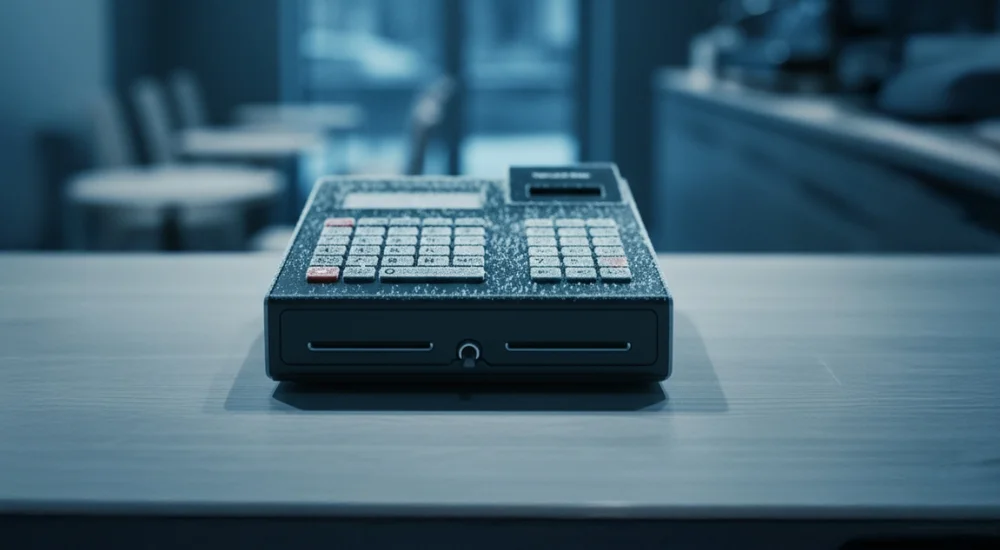
The most important rule to remember: if the deadline for mandatory technical inspection expired during business suspension, you must perform it immediately after resuming operations, but strictly before issuing the first receipt. Ignoring this obligation means a financial penalty and the risk of having to return the tax relief for purchasing the cash register.
The decision to suspend business operations is often a time to catch your breath and reorganize. In the rush of formalities, it is easy to forget about the equipment you work with every day. As the fiskasy.pl team, we make sure you can focus on business while leaving the technicalities and regulations to us. See exactly what you should do with your fiscal cash register during a business break to make returning to sales stress-free.
What do you need to know about your cash register during business suspension?
The regulations are on your side here and work very logically. Submitting an application for suspension of operations in CEIDG is completely sufficient – you do not report this separately to the tax office in the context of the cash register.
Here are your new rules during the break:
You do not deregister the cash register – the device remains your property and awaits your return.
You do not record sales – the fiscal memory is inactive, which means you are not required to generate empty daily or monthly reports.
You pause inspections (for a while) – you do not perform periodic technical inspections during the suspension period, provided you do not conduct any sales during this time.
Online cash registers and CRK – if you have an online cash register, you do not need to provide it with continuous connectivity to the Central Repository of Cash Registers during the suspension period.
How should you store your cash register to prevent failures?
Treat the cash register as an essential tool that must be ready to work at any moment. Not recording sales does not exempt you from taking care of the equipment. To avoid costly surprises upon restart, provide it with appropriate conditions:
Keep it in a box – the manufacturer's original packaging or a dedicated case is best to protect the equipment from dust and scratches.
Ensure proper conditions – store the device at a temperature of 10–25°C, in a place where humidity does not exceed 60%. Avoid radiators and strong electromagnetic fields.
Protect the ports – use caps for the power socket and communication ports to prevent dirt from entering.
Check the condition – once a quarter, inspect the casing and connectors to make sure everything is in order.
Inspection deadline passed during suspension? Avoid severe penalties
This is the most critical step of the whole process. The deadline for your technical inspection that fell during the suspension was formally "frozen". However, the moment you resume your business, this obligation returns with double force.
You must perform the inspection before recording the first sale. If you forget and the head of the tax office finds out about the lack of a valid inspection, the consequences are severe:
You will receive a fine of 300 zł (payable within 14 days).
You will have to return the tax relief for the purchase of the cash register (if full 3 years have not passed since its fiscalization).
Long-term suspension – when should you deregister the equipment?
If you are planning a very long break (e.g. over 3 years) or your suspension lasts more than 24 months (which may result in being struck off CEIDG), you should treat the situation as a permanent decommissioning of the cash register.
This requires specific action from you:
Put the equipment in our hands – you must deliver the cash register to an authorized service center. A service technician will perform a final fiscal memory readout.
Collect your documents – based on the readout, we will prepare a protocol for you and generate a settlement report for the entire period of the device's operation.
Submit the application – with the complete set of documents from us, submit an application to the tax office to deregister the cash register. Without this step, the office still considers your cash register active and may summon you to perform an inspection.
For more information on this topic, check out the detailed article by ESC SA: Business suspension and fiscal cash registers.
Take this off your mind – contact fiskasy.pl
Returning to business and want to make sure everything with your cash register is compliant with the law? Or are you closing your business for longer and need to read out the fiscal memory? We will not leave you alone with this. Contact our team today. We will schedule an inspection at a convenient time for you, before you return to active sales, ensuring you can focus on your customers with peace of mind.